

Quick answer: A dishwasher pod not dissolving can result from a blocked or damp dispenser, old detergent, unsuitable loading, insufficient fill or a cycle-specific performance problem. Start with the model manual, keep the dispenser dry and unobstructed, and use the detergent compartment exactly as directed. A persistent problem after those checks needs diagnosis rather than a one-part guess.
Key Takeaways
- The pod goes in the closed main dispenser, not loose in the bottom of the machine.
- A large plate or tray can block the dispenser flap on some loads. Check clearance before starting the cycle.
- Pods need hot water. Cold water leaves the film intact and the detergent unused.
- If the whole load also comes out cool and greasy, the heater is the fault, not the pod.
For a detergent pod not dissolving or a dishwasher tablet not dissolving, Whirlpool, detergent remaining at the end of a dishwasher cycle lists several checks, including caked detergent, a damp dispenser and rack position. It does not support treating every case as one loading or heating fault.
Dishwasher pod not dissolving? Check the loading first
The detergent dispenser is in the inner face of the door, and it has a flap that springs open partway through the cycle. It needs clear space in front of it.
A dinner plate, a baking tray or a cutting board loaded in the front row of the bottom rack will hold that flap shut. The pod stays sealed inside, the cycle runs with no detergent, and you open the machine to find dirty dishes and a pod sitting in the dispenser.
Load tall and flat items along the sides and at the back. Leave the space directly in front of the dispenser clear.
A blocked dispenser is a quick first check, but it is not proven to cause more cases than every other factor.
Put the pod in the right place
Pods go in the main covered compartment, and the lid gets closed. That compartment is designed to release its contents at the right moment in the cycle, after the machine has drawn water and heated it.
Put a pod only where the product and dishwasher instructions direct. Placement can differ by detergent and model, so do not assume the tub or dispenser is universally correct.
The small open compartment next to the main one is for pre-wash detergent, not for the pod.
Water temperature
Pods are built around a water-soluble film that needs heat to break down. In cold or lukewarm water the film softens slowly and often survives the cycle, which is why you find a sticky lump rather than a clean empty dispenser.
Two separate things can cause that.
Cycle temperature and duration vary by model. Use the detergent and dishwasher instructions to choose a compatible cycle.
If cleaning, fill or drying performance also changed, record those symptoms. Temperature cannot be judged reliably from one touch test, and a technician must distinguish heating, filling, circulation and control faults.
It is the same underlying issue behind a dishwasher that will not dry dishes.
Narrow it down
| What you find | Possible check |
|---|---|
| Dispenser flap shut | Look for loading that blocks the flap |
| Pod stuck or caked | Dry and clean the dispenser; replace damp or old detergent |
| Pod partly dissolved | Confirm cycle, fill and detergent instructions |
| Problem persists | Arrange model-specific diagnosis |
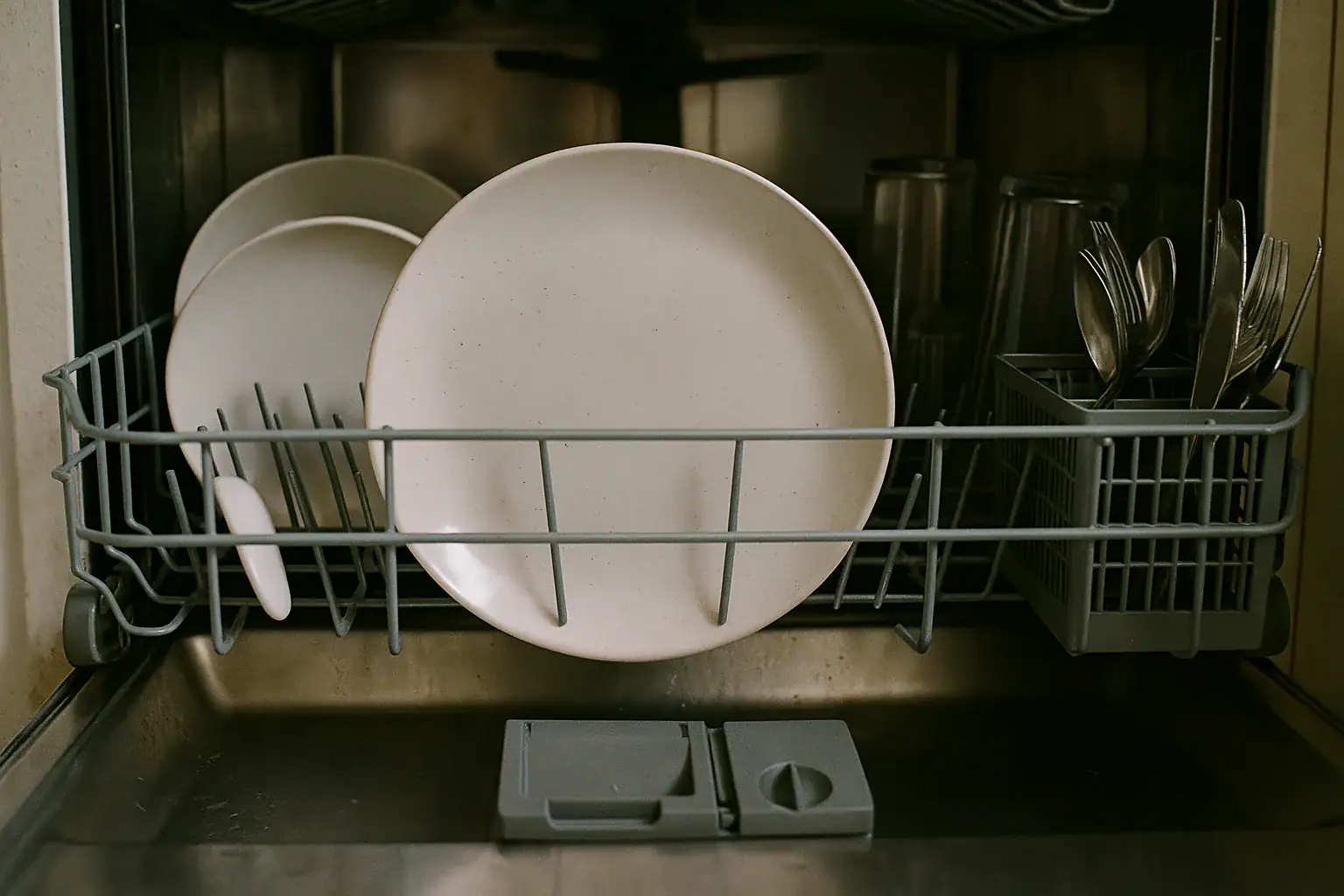
A wet dispenser
Pods stick to a damp dispenser. If you load the machine straight after unloading a hot cycle, or if your hands are wet when you handle the pod, the film starts to soften immediately and glues itself in place. The flap opens and the pod stays put.
Dry the dispenser with a cloth before loading, and handle pods with dry hands.
Old or badly stored pods
Detergent exposed to moisture can clump or stick. Store it sealed in a cool, dry location and replace it if its condition has changed.
A hardened or damaged pod may dissolve poorly. Replace it and keep the dispenser dry before blaming the appliance.
A dispenser that is not opening properly
The dispenser mechanism is a small latch released by the control board partway through the cycle. Detergent residue builds around it over years and eventually stops the flap springing fully open.
Clean it as part of the routine. Wipe the compartment out when it is dry, and clear any caked powder from around the hinge and the catch. It is one of the areas covered in how to clean a dishwasher.
If the flap remains closed after approved cleaning and loading checks, the dispenser or its control may need diagnosis. Do not order a latch or actuator from the symptom alone.
Water not reaching the dispenser
The dispenser is rinsed by the upper spray arm. Blocked jets in that arm can leave the compartment barely wetted, so the pod sits there in a mostly dry pocket.
Check that the upper spray arm can rotate when loaded. Remove or clean it only if the owner’s manual gives the procedure for that model.
Frequently asked questions
Should I use powder or gel instead?
Powder and gel dissolve at lower temperatures, so they are a reasonable workaround on a machine that runs cool cycles. They are not a fix for a heating fault.
Is it bad to put the pod in the bottom of the machine?
It wastes the detergent. It dissolves in the pre-rinse and gets pumped away before the main wash. Some manufacturers suggest it for very short cycles, but as a habit it produces poor results.
Do I need to remove the plastic wrapper?
No. The film on modern pods is designed to dissolve. Removing it is messy and unnecessary.
Why did this start happening suddenly?
A new box of pods, a change of cycle, a different loading habit, or the water no longer heating. Check them in that order.
Could hard water be the reason?
Water hardness can affect cleaning and film. It does not, by itself, identify why a pod remained in the dispenser.
Where to go from here
Related: a dishwasher not cleaning properly, film and spots on dishes and a dishwasher that smells. If water is also sitting in the bottom, see a dishwasher not draining.
For a heater or dispenser fault, book dishwasher repair in Winnipeg.
Need a diagnosis in Winnipeg? Call (431) 813-3999 or book a visit online. Diagnosis is $95 in Winnipeg and $120 outside the city. If you approve the repair, the quoted repair price includes the diagnostic visit.


